My Daughter's Violin and the Code That Taught Me to Listen
Share
I’ve always struggled to stick with Python. I've bought the courses, started the tutorials, and felt that initial spark of excitement, only to have it fizzle out. Sometimes the content was too basic, and I'd get bored. Other times, life simply got in the way, and my consistency would evaporate. I needed a project—a real, meaningful problem that would grab my attention and refuse to let go. I found it in my daughter's violin.
My daughter, now nine, is three years into her musical journey and recently passed her Grade 3 ABRSM exam. I couldn't be prouder. In the early days, I was her coach. I could guide her on how to hold the bow, correct its angle to produce a cleaner sound, and offer encouragement when she stumbled through a difficult passage. But as she's advanced, my ability to help has diminished. I don't have the trained ear of a professional musician. I can't pinpoint that one misplaced note in a rapid scale or distinguish between a crisp staccato and a bouncing spiccato.
This feeling of helplessness sparked an idea: could technology bridge the gap? My initial thought was to use an AI model for music classification. But as I researched, I realised that wasn't the right tool. We already knew what she was playing—a G Major scale, for instance. What I needed to know was how well she played it.
This quest led me down a rabbit hole of discovery, and at the bottom, I found a powerful combination: Python and its vast ecosystem of audio processing libraries. Suddenly, I was diving into Pandas, PyTorch, and a sea of scientific concepts that had been dormant since my school days. This wasn't just another tutorial; it was a mission. And for the first time, I was genuinely excited to document my journey.
A Lifelong Passion for Sound
My connection to music and technology isn't new; it's a thread that has woven through my entire life. Some of my earliest memories are musical. In primary school, I was one of three kids chosen by our teacher to play percussion instruments during the morning assembly. Her only instruction was, "Make it up and have fun." And we did. For a whole year, we improvised rhythms to every song, and it was in that creative freedom that my passion took root.
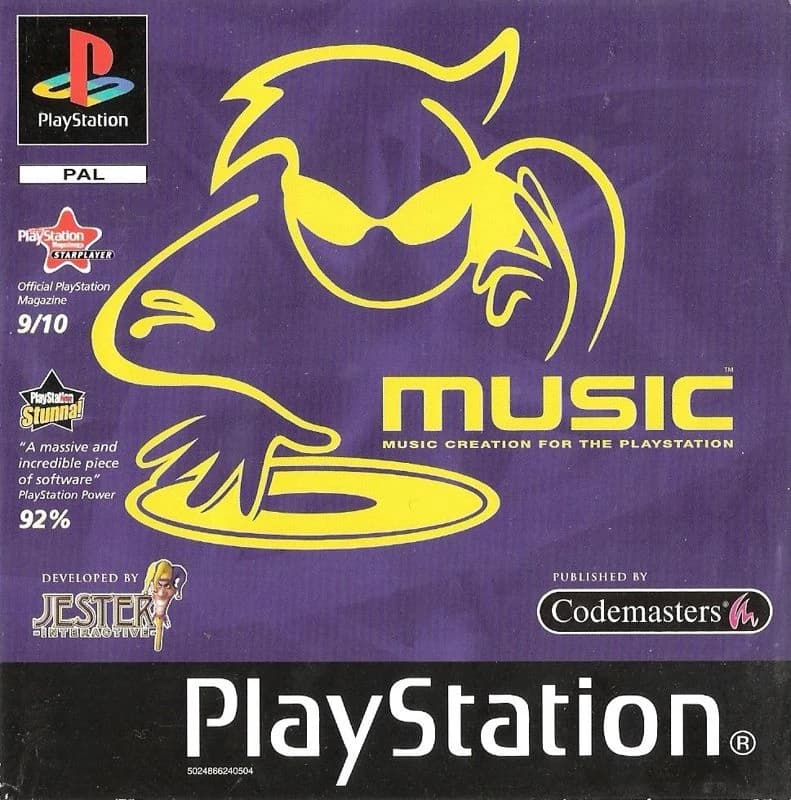
Fast forward to my teenage years, and I was obsessed with Garage, House, and Jungle music. I discovered a music sequencing game on the PlayStation and was instantly hooked. My dream was to become a producer and a DJ. That early fascination evolved into a serious hobby, and I soon graduated to more advanced Digital Audio Workstations (DAWs) like Cubase, Logic, and Reason. While I never pursued it professionally, making music has remained a constant love in my life.
When it came time for university, I wanted to find a way to merge my passions. I was drawn to sound engineering but wanted a broader technical foundation. I found the perfect fit: a degree in Multimedia Computing with a minor in Music Technology at West London University. Those were some of the most enjoyable years of my life. I studied everything from game design and software engineering to photography, all while deepening my understanding of not just music, but sound itself. With 24-hour access to the legendary Ealing Studios, many of my nights were spent lost in creative projects. I still vividly remember a knock on the studio door one evening—it was the producer and DJ, Goldie. He heard what I was working on and, let's just say, was very complimentary.
Now, years later, I'm finally bringing my two worlds together. This project is more than just code; it’s an attempt to fuse my love for software engineering with my passion for music, all to help my daughter shine.
In Part 2, I’ll dive into the technical details of my project so far, the challenges I’ve already faced, and where I hope this journey will take us.